Access to Healthcare - What It Actually Takes
Coverage isn't the same thing as access. You can have a card in your wallet and still wait six weeks, drive forty minutes, and face a copay you can't cover. Here's the difference, and what closing that gap requires from Springfield.
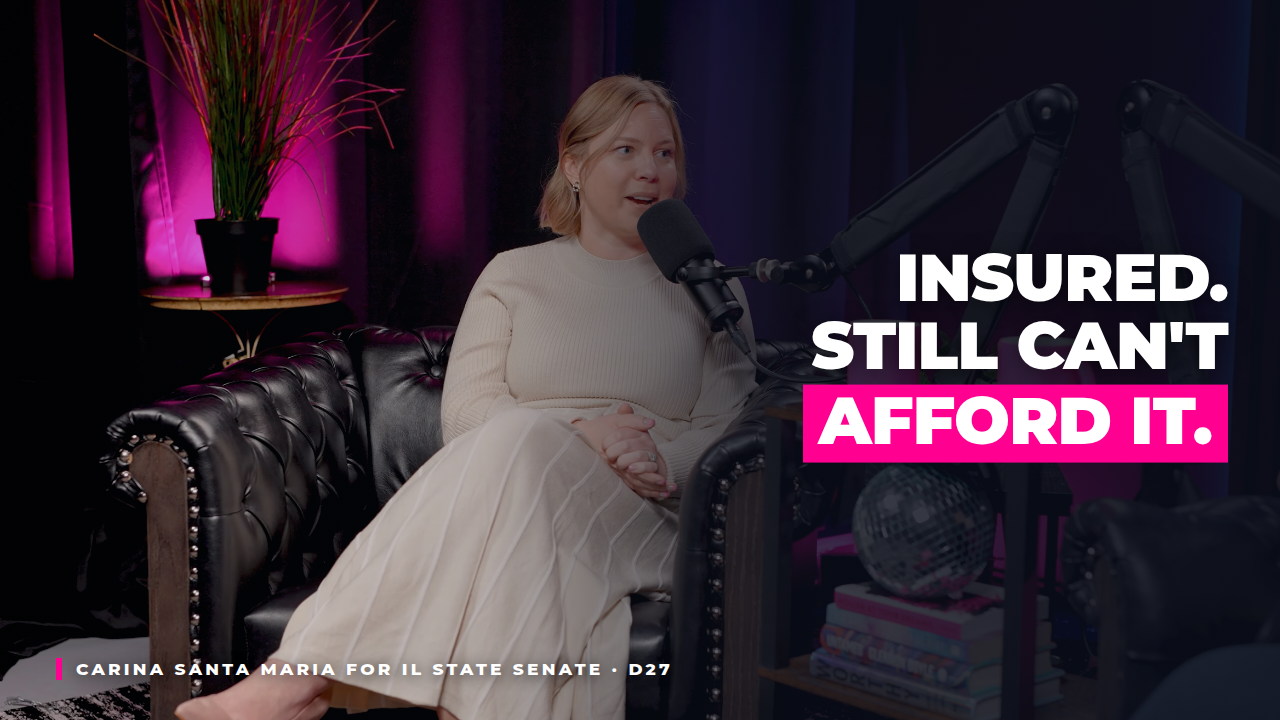
We have food pantries in this country. We don't have medication pantries.
I think about that a lot. If you can't afford groceries this week, there is somewhere you can go. If you can't afford your insulin this week, there often isn't. People in our state are choosing between housing and healthcare, between food and the prescription, every single day. I've heard about someone who died because they couldn't pay for their insulin after paying for housing. That should never happen in Illinois. When it does, government has failed.
When I talk with people across District 27, healthcare comes up constantly. Medication costs too much. Some people can't get insurance at all. Others have it and are still underinsured, so a routine procedure eats a huge part of their budget. And so people skip the care that could have prevented something bigger. That doesn't save money. It just moves the cost to the emergency room, and it adds weight to a system that's already overburdened.
I've said this about public safety and I'll say it about health: prevention is where it's at. We know it works. The outcomes are there.
Start with breast cancer
October is Breast Cancer Awareness Month, and I want to talk about it differently than a pink ribbon does.
Breast cancer is rising fastest in women younger than 50, about 1.4 percent a year according to the American Cancer Society. Federal screening guidance moved in 2024 to recommend mammograms starting at 40. That's progress. But when the data keeps shifting toward younger women, our laws should keep up with it. I want women able to get screened earlier, because that's what the science is telling us. The laws we write should follow the science and protect the people in our districts.
And a screening only works if you can finish what it starts. A mammogram that leads to a follow-up bill you can't pay is not access. That's where women drop off, and that's where early detection turns into late detection.
The gap nobody campaigns on: Dental Care
There's a serious shortage of dentists who take Medicaid. So children and adults who technically have coverage still go without cleanings and checkups because nobody near them accepts what they have. Untreated dental problems don't stay dental problems. They become infections, ER visits, missed school and missed work, and bigger health issues that cost far more than a cleaning ever would.
I'm the person who digs and digs until I find the root cause. Fix the root, and everything downstream gets easier. This is one of those roots.
Mental health is health care
The same gap shows up in mental health, and I've watched it from the inside. People don't usually wait too long to ask for help. They ask, and then they wait. On a list. On hold. For a provider who takes their insurance. For a callback that doesn't come.
That's a capacity problem. We need community-based behavioral health close to where people live. And we need to pay the people who do this work enough that they stay in it. My first job out of college paid ten dollars an hour, working with kids with developmental disabilities, and I watched good people leave that field because the math didn't work. Every one of them took years of trust with them.
Your body, your decision
Reproductive health care is health care. That means screenings, contraception, prenatal care and abortion. Illinois has been a place people can count on for all of it, and I'll protect that. Protecting it also means making it real: an appointment you can actually get, close to home, at a cost you can actually manage.
What I'll fight for in Springfield
Caps on what people pay for prescription drugs. There's legislation moving on this right now, and I'd fully support it. Screening laws that follow the science, including earlier breast cancer screening for younger women. Real Medicaid access, including dentists and specialists who actually accept it.
Community mental health care close to home, and a workforce paid enough to stay.
Protecting reproductive rights and comprehensive care across the state.
Why I see it this way
A lot of people assume that if someone is struggling, there's a system to catch them. DCFS. DHS. Medicaid. Those systems exist, but they often aren't working the way we need them to. Social work taught me to see those gaps, and to ask why they're there. These aren't abstract issues to me. They've touched my own family and people I love. There's no judgment here. We've all lived some version of this.
If you've been putting off a screening, book it this week. Then send this to someone who's been putting off theirs.
This was part of a longer conversation about how systems actually treat people.
Full episode here: https://www.carinaforsenate.com/senate-news/access-to-healthcare
Thank you to everyone who continues to show up, speak up, and invest in the work of shaping our shared future. I’m deeply grateful to be on this journey with you.
Let’s keep going—because together, we’re stronger.

With gratitude,
Carina Santa Maria
Candidate for Illinois State Senate, District 27
